THE DEFINITION AND BACKGROUND OF ISLAMOPHOBIA
- Islamophobia is the fear of, hatred of, or prejudice against the religion of Islam or Muslims in general, especially when seen as a geopolitical force or a source of terrorism.
- The term "Islamophobia" can be traced back to 1910, when Alain Quellien used it to criticize French colonial administrators for their treatment of Muslim subjects.
The conflict between the West and Islam dates back to Islam's inception. As time passed, the relationship between the two civilizations became more intense, as they began to disagree with each other even when they were at peace. Wars increased in specific areas known as "frontiers." For a time, everything was calm, with only minor clashes taking place, but then September 11 happened. After the incident, every American believed that Islam was to blame for such heinous crimes, and since that day, hate crimes against Muslims have consistently been five times higher than before 9/11. In reality, 9/11 was an isolated incident carried out by a radical terrorist group; Islam is not to blame.
DISCRIMINATION AGAINST MUSLIMS IN UNITED STATES
 |
| #HijabOurRight |
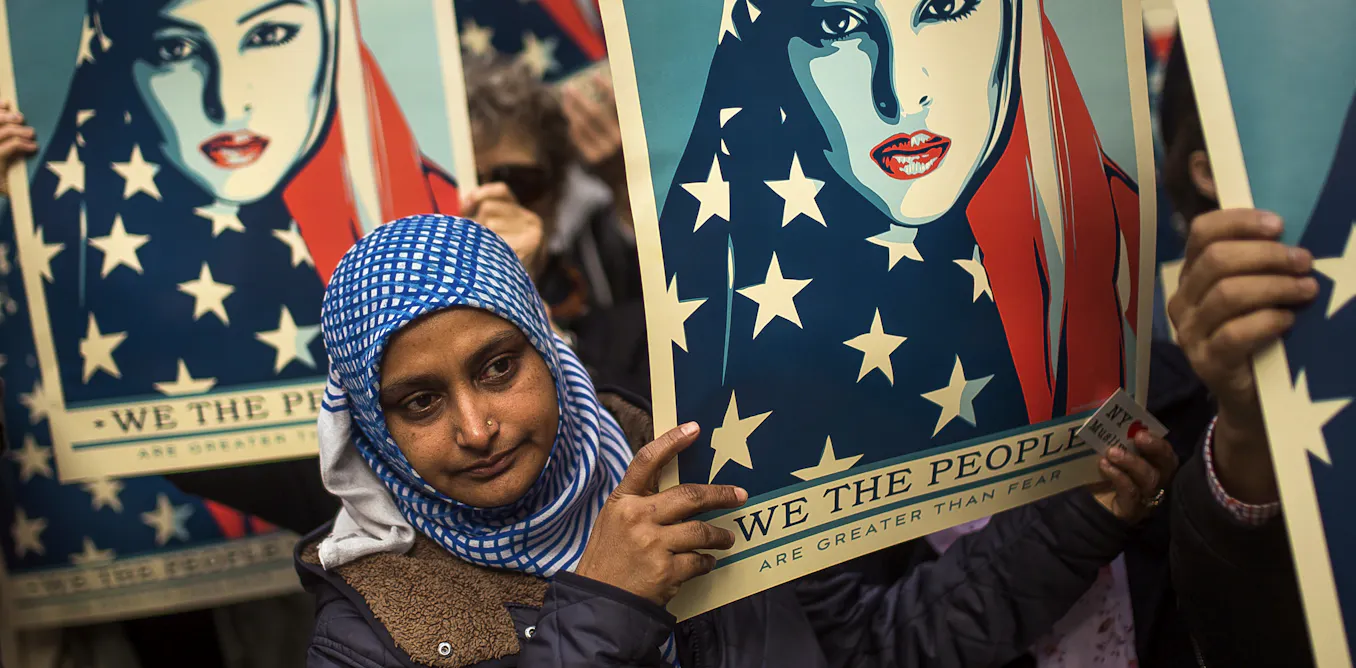
In a number of situations, Muslim women have been prohibited from wearing head coverings. They have been harassed, fired from jobs, denied access to public places, and otherwise discriminated against because they wear a hijab. Because of their visibility, Muslim women who wear hijab are particularly vulnerable to discrimination and have become increasingly targets of harassment in the aftermath of September 11.
While it is difficult to obtain accurate statistics on discriminatory incidents, reported instances of discrimination appear to be on the rise. According to one expert, Muslim women who wear headscarves are more likely to face discrimination than those who do not: 69 percent of hijab-wearing women reported at least one incident of discrimination, compared to 29 percent of non-hijab-wearing women.
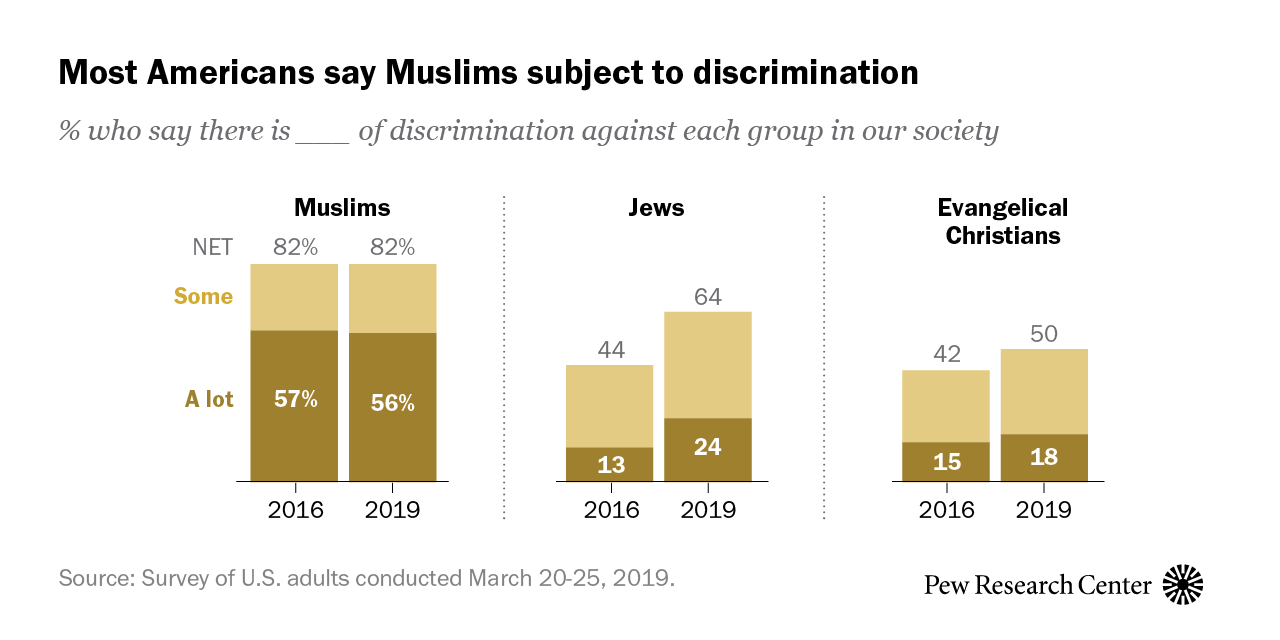 |
According to a Pew Research Center survey conducted in March, the majority of American adults (82 percent) believe Muslims face at least some discrimination in the United States today, with the majority (56 percent) believing Muslims face a lot of discrimination.

HIJAB BAN IN FRANCE
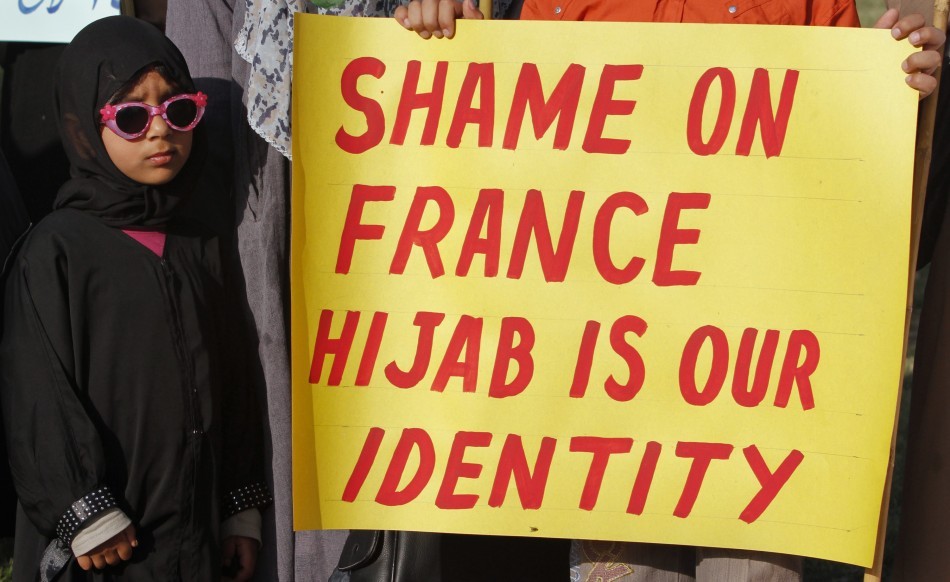 |
The French government passed a law prohibiting the wearing of garments seen as part of the Muslim hijab in 2004 and began enforcing it in September of that year. Along with the hijab, other religious symbols, including the Sikh turban, are prohibited from being worn in French public schools. The ban on religious symbols does not include prohibiting the wearing of Christian symbols such as the crucifix. The French hijab ban does not allow any person entering the property of a state-run school to wear a headscarf or other religious symbol.
 |
| #HandsOffMyHijab |
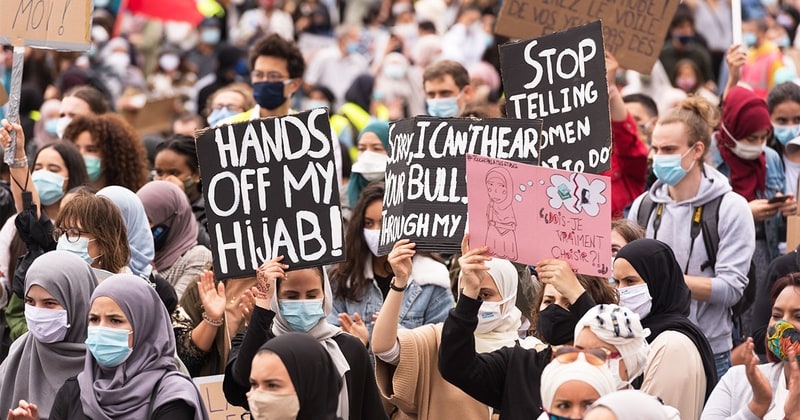
The French Senator recently approved an amendment to the hijab ban, which states that girls under the age of 18 are no longer permitted to wear a hijab in public places. The amendment was justified in order to prevent parents from "imposing any dogmas on their children" and to "prevent minors from wearing any outfit that would imply the inferiorization of women" (Public Senat, 2021).
The previous version of the hijab ban already required students and civil servants to refrain from wearing head and face coverings, and this has now been extended to Muslim mothers participating in extracurricular activities (Washington Post, 2021). The bill's stated goal is to strengthen France's secular system (Aljazeera, 2021).
HIJAB BAN IN INDIA

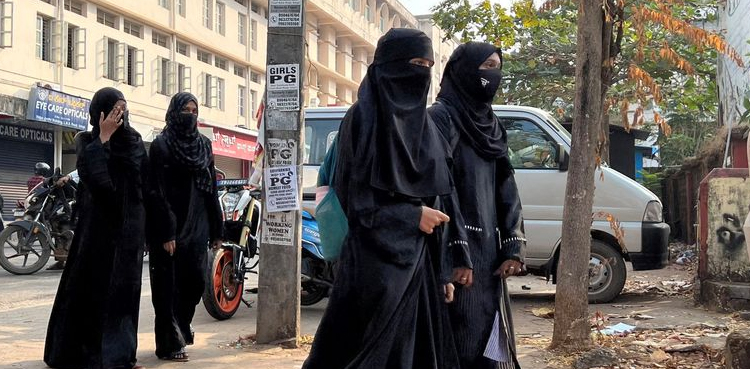
The Karnataka High Court upheld the ban on hijab by the educational institutes on 15 March 2022. The court ruled that hijab is not an essential religious practice under Islam and, hence, is not protected by the Article 25 of the Constitution setting out the fundamental right to practice one's religion.
After hearing petitions from Muslim students challenging a government ban on hijabs that some schools and colleges had implemented in the last two months, the Karnataka state high court issued the ruling. The ban does not apply to other Indian states, but the court decision may set a precedent for the rest of the country.
 |
| “It’s not just about religion, it’s about freedom of choice.” |
More schools in the state followed suit, and the state's highest court barred students from wearing hijab or any religious clothing pending a verdict. Karnataka ministers told that Muslim students who stayed away from classes in protest against the ban should respect the decision and re-enter school.
Overall, Islamophobia is a growing problem around the world. Anti-Muslim racism shows up in the form of hate crimes and attacks that target Muslims, harming individuals and creating division in communities. So, we need to raise awareness about the true nature of Islam, which is a beautiful religion centered on peace and compassion. By encouraging open conversations and understanding, we can help change perceptions and build a more inclusive society for everyone.
So, with all of this information, I hope you have a better understanding of this topic. I sincerely thank the readers for sticking with me until the end. Thank you so much for your time <3